

Devious political machinations are unfolding in Somalia—crafted in backrooms, hidden behind talk of “peaceful transition,” by unscrupulous Somali politicians and a team of expert spoilers within the international community. From the beginning of his term, President Hassan Sheikh Mohamud has set in motion an orchestrated political coup, dismantling the constitutional order piece by piece to secure unearned, unlawful, and indefinite power.
The president has deliberately created political chaos designed to keep him in office at any cost. He unilaterally and indefinitely extended—without any legal, public, or reasonable justification—the terms of office for the presidents and parliaments of four federal member states: Southwest, Jubbaland, Galmudug, and Hirshabelle. This alone was one of the most damaging acts to constitutional supremacy and the legitimacy of the federal system.
After a year under this arbitrary extension, Jubbaland President Ahmed Islam withdrew from the arrangement and held state elections, resulting in his reelection for new five-year parliamentary mandate. This triggered a violent confrontation with the federal government that lasted from November 25, 2024 to October 5, 2025, causing deaths, destruction of public assets, and the collapse of federal security forces. It was only after Kenyan and Ethiopian mediation that President Hassan travelled to Kismayo on October 5, 2025.
The first face-to-face meeting between President Hassan and President Ahmed Islam produced no results. The uncivilised and insulting statements issued afterward by both sides were embarrassing and beneath the dignity of the Somali people. One wonders why they met at all if neither recognised the authority or legitimacy of the other.
The second egregious act was the unilateral amendment of the first four chapters of the Provisional Constitution—done solely to concentrate power in the presidency. The amendments introduced one-person-one-vote elections for federal and state institutions while paradoxically retaining the 4.5 clan formula. They also created a single federal election commission with unchecked control over election procedures, delays, and results—without any possibility of legal challenge and accountability. This commission is widely regarded as neither independent nor impartial, and firmly loyal to the president, typical of electoral bodies in authoritarian regimes.
Even more contradictory, the amendments prescribe local elections in the Benadir Region (Mogadishu)—the seat of the federal government—while the constitution defers the status of Mogadishu under article 9 to political agreement, it remains unresolved. This contradiction is yet another evidence of 25 years of stalled and mismanaged state-building.
For years, completing the Provisional Constitution through a transparent and inclusive process was the country’s top priority. The goal was to establish a federal system that protects national unity, builds trust, ensures accountability, and prevents the abuse of power. Instead, President Hassan’s actions have revealed an authoritarian drift that has deepened state fragility. Puntland, sensing this aggressive power grab, withdrew from the National Consultative Council and suspended cooperation with the federal government—a deeply troubling setback. In retaliation, the federal government withheld international funds allocated to Puntland and Jubbaland, further fracturing the federal arrangement at a time when Somalia already faces Somaliland’s secessionist pressure.
Amid widespread condemnation, President Hassan slightly modified his position and reinstated the office of the prime minister—but only as a ceremonial figure who can be appointed and dismissed at his whim. In essence, the amendments to Chapter 4 were designed to secure a power grab, disrupt the federal system, and limit any paths toward democratic governance.
Despite overwhelming reasons to halt this destructive path, the president pressed ahead with a fraudulent process aimed at showcasing a one-person-one-vote election in Mogadishu by November 2025—an idea 95% of Somalis view as unrealistic under current conditions. To worsen matters, President Hassan created the “Just and Solidarity Party” (JSP), pressuring federal member state leaders, cabinet ministers, MPs, civil servants, and security forces to join. Government jobs, promotions, contracts, and corrupt payments are now tied to JSP loyalty—effectively establishing a ruling party before the political system or constitution has been finalised. Many citizens watch these bizarre developments with disbelief. The president’s deeper aim is to complicate Somalia’s political landscape so severely that any solution becomes damaging to national governance.
Another tactic used by President Hassan is the violation of human rights, suppression of opposition, and lobbying foreign powers to support an authoritarian and kleptocratic government—contrary to the aspirations of the Somali people.
As his term nears its end, the president has launched symbolic and empty “engagements” with the opposition, while fostering fake opposition groups that secretly support him. These actions aim to distract the public, create confusion, manipulate time, and fabricate the illusion of political dialogue. The true goal is to reach the end of his term without any agreed electoral process, allowing him to remain in office under the pretext of “avoiding a political vacuum.” This constitutes an illegitimate term-extended government.
The most troubling recent development is the proposal for a two-year term extension under the label “Somalia’s Exceptional Reform Window.” It describes the extension as a “corrective pause” to rebuild state institutions—an admission of 25 years of failed state-building. It calls for a “technocratic unity government” under the same president and parliament that created the current crisis. This is absurd. A technocratic government controlled by the same leadership cannot implement reforms. It is a trap. Believing that those who dismantled governance will suddenly rebuild it when granted more time is naïve and dangerous.
Some argue the proposal originated from President Hassan’s office to preserve his tenure. Others believe it was drafted with the quiet approval of certain international actors who prioritise superficial “stability” over Somalia’s constitutional order. The international community knows that this proposal contradicts the principles of legitimacy and democratic governance it claims to support. Having observed three and a half years of mismanagement and manipulation, its ambiguous stance is both incomprehensible and damaging to public trust.
The only peaceful and viable option for Somalia is to hold an indirect election managed through joint domestic consensus and international supervision, reducing the abuses and disastrous practices seen in the last two election cycles. Continuing with illegal term extensions—now a political cancer—will push Somalia toward economic collapse, renewed civil war, social fragmentation, mass displacement, poverty, disease, unemployment, and further entrenchment of terrorism and extremism.
The international community must immediately clarify its position regarding the end of the mandates of the current federal government and three federal member states, the protection of the opposition, the role of the civil society, the misuse of security forces and courts, and the future of democratic governance in Somalia. A clear and timely response could prevent further deterioration of Somalia’s political, security, and economic situation.
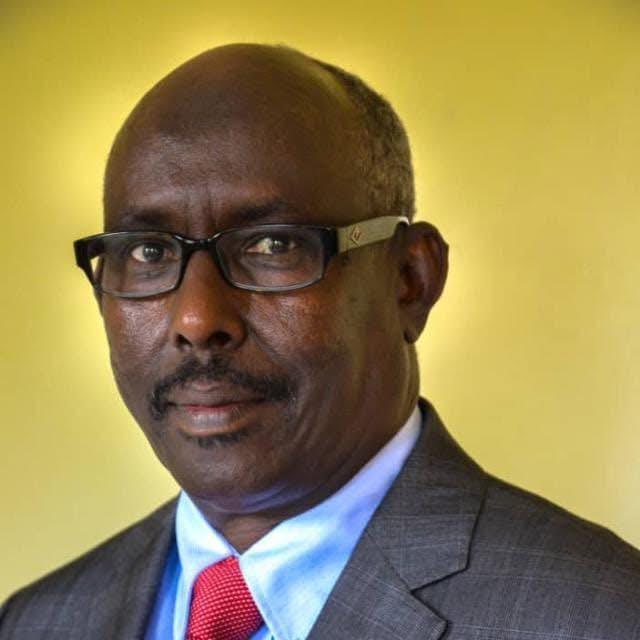
Dr. Mohamud M. Uluso

