

Israel’s reported move to recognise Somaliland as an independent state carries geopolitical implications far beyond the Horn of Africa. It must be read not as a neutral act of diplomacy, but as a strategic manoeuvre by a state that is itself increasingly isolated. Israel today stands accused before the ICC and ICJ of grave crimes in Gaza, widely described by legal scholars, human rights organisations, and much of the Global South as genocidal. When a state under such scrutiny seeks to confer “recognition” on another entity, the obvious question arises: should its endorsement carry any moral, legal, or political weight at all?
From Israel’s perspective, recognising Somaliland would fit a long-standing pattern: cultivating peripheral alliances to break regional isolation, gain access to strategic waterways near the Red Sea and Gulf of Aden, and project influence close to the Arab world and East Africa. This is not altruism, nor respect for self-determination, but hard geopolitics. A pariah state seeks legitimacy by granting legitimacy elsewhere. Yet legitimacy cannot be borrowed from a source that lacks it.
For neighbouring Arab states, many of which are authoritarian, hereditary, or military dictatorships, the outrage now being expressed rings hollow. These regimes have long suppressed their own populations, crushed dissent, ignored popular will, and in some cases actively colluded with Israel while posturing as defenders of Palestinian or Muslim causes. Their alarm over Somaliland often sounds like a pot calling the kettle black: opposition to fragmentation abroad while presiding over repression at home. The concern is less about Somali unity and more about precedent—fear that borders drawn and redrawn without popular consent could one day be applied to them.
The core question, however, is whether dividing Somalia makes Somalia stronger. History offers a clear answer: fragmentation rarely empowers weak or post-conflict states. From colonial divide-and-rule strategies to the partitioning of nations across Asia, Africa and the Middle East, external recognition of breakaway regions has usually deepened instability, entrenched elite interests, and weakened collective sovereignty. Somalia’s tragedy since colonial times has been imposed borders, foreign interference, and internal fractures exploited by outside powers. Further division risks cementing that legacy, not overcoming it.
More broadly, this episode exposes how far the Muslim world has drifted from its own stated ideals. There was once a serious intellectual and political aspiration—however imperfect—to build greater unity among Muslim countries: economic cooperation, political coordination, and a shared moral voice on the global stage. Today that vision lies in tatters. Sectarianism, nationalism, authoritarianism, and foreign dependency have replaced solidarity. While Palestine burns and Somalia risks further dismemberment, Muslim-majority states remain divided, reactive, and often complicit.
Looking ahead, the region faces two diverging paths. One leads to further fragmentation: smaller, weaker entities recognised selectively by powerful or rogue states for strategic gain, perpetual instability, and deepening foreign control. The other—far more difficult—requires political reform, popular legitimacy, regional cooperation, and a renewed commitment to justice over expediency. Without that shift, external actors like Israel will continue to exploit divisions, and symbolic recognitions will keep masquerading as diplomacy.
In that context, the question “Should anyone take Israel seriously?” answers itself. A state accused of apartheid and genocide cannot credibly pose as an arbiter of sovereignty or international order. Its recognitions serve its interests, not regional peace. The real tragedy is not Israel’s manoeuvring—it is the vacuum of principled leadership in the Muslim and African worlds that allows such manoeuvres to matter at all.
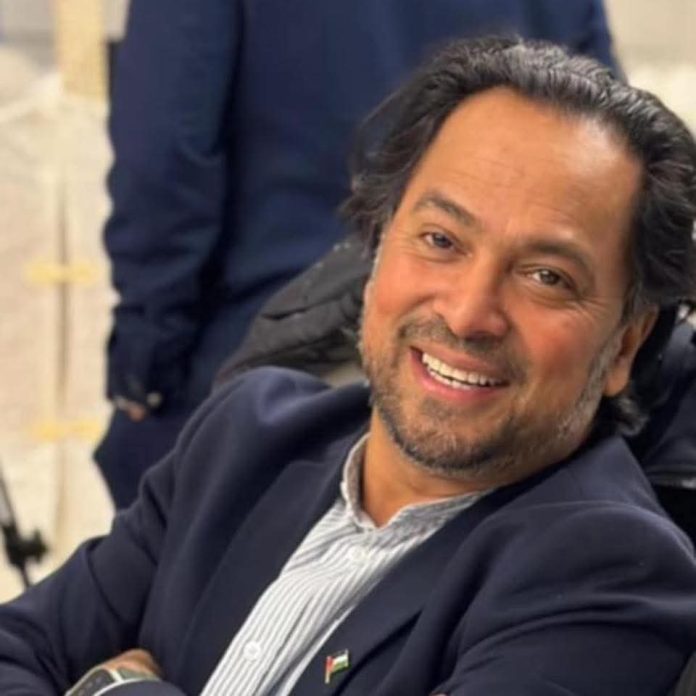
✍️ by: Ajmal Mansour.

