

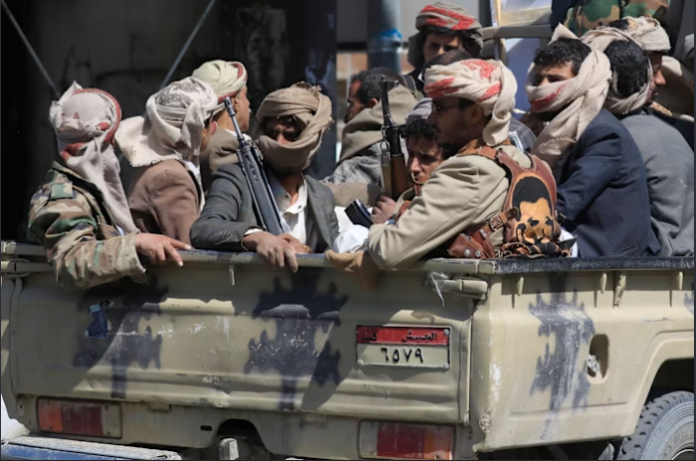
Purported arms sales, military training and growing contacts between Yemen’s Iran-backed Houthis and Somalia’s Al-Qaeda-affiliated Al-Shabab are raising alarm over a partnership that could strengthen both groups and widen the threat to international shipping.
US Africa Command has warned that the relationship poses an escalating danger to regional stability, potentially increasing Al-Shabab’s ability to carry out attacks in the Horn of Africa. And giving the Houthis greater access to maritime corridors in the Red Sea and western Indian Ocean, according to Financial Times reporting carried by regional news outlets.
The warning brings into focus a threat that extends beyond individual weapons shipments: the possibility that the two armed groups could combine technical expertise, smuggling routes and coastal access to undermine security across the Gulf of Aden.
Daniele Garofalo, an intelligence and terrorism analyst and security consultant, told Arab News that the reported exchanges point to an increasingly consequential relationship.
“What has changed, in my assessment, is the depth of the transaction,” he said.
“The simple discovery of Yemeni-origin weapons in Somalia does not by itself demonstrate Houthi-Al-Shabab cooperation. What is more significant is the accumulation of evidence since 2024 indicating direct contacts, training arrangements and the movement of Al-Shabab personnel to Yemen.”
The Financial Times reported alleged Houthi weapons sales and training for Al-Shabab members. Somalia specialist Matt Bryden, a former head of the UN Panel of Experts on Somalia, estimated that as many as 1,500 fighters from Al-Shabab and other Somali factions had trained with the Houthis in Yemen.
That estimate covers several factions, not 1,500 confirmed Al-Shabab members. Nevertheless, the reported scale of personnel movement adds to concerns that the relationship is becoming more organized.
Earlier warnings from the Africa Center for Strategic Studies also placed cooperation between the groups at the center of a broader regional security threat.
In a May 2025 analysis, the center said their growing collaboration was strengthening both organizations and increasing risks to maritime traffic in the Red Sea, Gulf of Aden and western Indian Ocean. It described UN-reported meetings in 2024 concerning weapons and training transfers in exchange for greater piracy and arms smuggling.
The danger is that such exchanges could help sustain the Houthis’ maritime campaign while giving Al-Shabab additional means to attack Somali and African Union forces and undermine efforts to stabilize Somalia.
“The reported training component is particularly important,” Garofalo said.
“If these activities continue, we are looking at something qualitatively different from ordinary arms trafficking: a limited but potentially consequential transfer of military knowledge.”
For security planners, the transfer of expertise could be harder to counter than the movement of weapons alone. An intercepted shipment can be seized. Skills in constructing explosives, adapting drones or maintaining weapons can spread among fighters and remain available long after a particular supply route is disrupted.
“There is an important difference between Al-Shabab purchasing a drone or a weapon and Al-Shabab acquiring the knowledge required to modify, manufacture, maintain and employ that system independently,” Garofalo said.
“Training in IED (Improvised Explosive Device) construction, drone adaptation or weapons maintenance therefore deserves more analytical attention than the simple number of weapons transferred.”
The concern is especially acute around maritime routes where the Houthis have already demonstrated the disruptive power of missiles, drones and unmanned systems.
Attacks on commercial vessels have forced shipping companies to divert journeys, increased costs and required substantial naval resources to protect trade. A relationship that gives the Houthis access to additional supply networks, coastal facilitators or surveillance opportunities could make that threat more difficult to contain.
Al-Shabab, meanwhile, could use technical assistance to strengthen its existing campaign in Somalia even without developing a comparable ability to attack international shipping.
“The most consequential transfer would not necessarily be large quantities of rifles or ammunition,” Garofalo said.
“Al-Shabab already has access to those.”
More specialized capabilities could have a greater impact, including expertise in advanced improvised explosive devices, drones, communications, anti-aircraft systems and maritime surveillance.
“Even relatively modest transfers could produce disproportionate effects if they address specific capability gaps,” Garofalo added.
Lesley Anne Warner, a visiting scholar with the Africa Program at the Carnegie Endowment for International Peace, founder and principal consultant at PhaseZero Solutions and former US State Department official, said financial incentives help explain why the groups would cooperate despite their ideological differences.
“For the Houthis, it’s hard currency to pay for their operations. For Al-Shabab, it’s an upgrade in military materiel.”
She warned that the importance of the surrounding shipping routes creates opportunities for armed groups to profit from insecurity.
“Harassing maritime commerce on both sides of the Arabian Peninsula, given the volume of traffic through the region and its significance to the global economy, provides very lucrative opportunities for extortion,” she said.
source: FT

