

Between 2022 and 2026, leading international institutions monitoring governance—including the World Bank, Transparency International, the Mo Ibrahim Foundation, the Fund for Peace, and the Institute for Economics and Peace (IEP)—consistently ranked Somalia as one of the world’s most fragile and dangerous states. Citing rampant corruption, political factionalism, high insecurity, and institutional weakness, these reports highlighted a crisis that should have spurred urgent and uplifting reform. Instead, Somali leaders took advantage of these institutional weaknesses and became predators of public resources, abusers of power, practitioners of patronage and nepotism, and election manipulators. Somalia bears one of the highest economic costs of violence globally, forcing local entrepreneurs to flee the country and making foreign investment almost unthinkable.
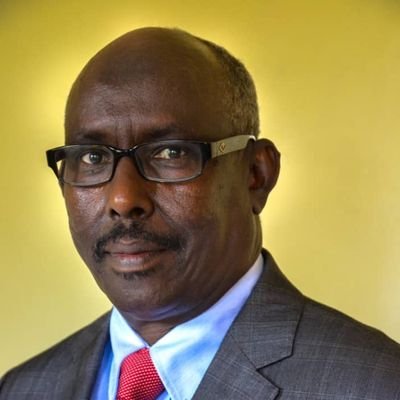
Against this backdrop, Prime Minister Hamza Abdi Barre—who assumed office on June 25, 2022, and transitioned to caretaker status in April 2026—presided over a period of profound institutional regression. Under his leadership, Somalia’s governance model drifted toward authoritarian centralism and oligarchy, effectively destroying constitutional checks and balances.
Rather than asserting the executive authority vested in his office, Prime Minister Hamza allowed the Prime Minister’s Office and the broader cabinet to become functionally subordinate to the Presidency. In doing so, he abdicated his constitutional mandate, eroded executive accountability, and enabled a kleptocratic system of governance.
The Breakdown of Somalia’s Constitutional Order
Understanding the gravity of this collapse requires examining the design of Somalia’s Provisional Federal Constitution. The document establishes three distinct branches—legislative, executive, and judicial—with a clear separation of powers, positioning the President as a neutral Head of State. The President serves as a constitutional guardian representing national unity, explicitly barred from managing day-to-day administration.
Indeed, daily executive authority is vested in the Prime Minister and the Council of Ministers. Deriving parliamentary legitimacy through a vote of confidence, the Prime Minister directs government affairs, formulates national policy, and leads public administration. Should parliament withdraw confidence, executive authority shrinks to that of a caretaker administration.
The Failure of Constitutional Leadership
The defining institutional failure of Prime Minister Hamza’s tenure was his complete surrender of executive independence. Rather than acting as the distinct head of government mandated by law, his office functioned as a mere administrative extension of President Hassan Sheikh Mohamud. This dynamic created an unprecedented overreach in which the President directly managed military affairs, security apparatuses, the judiciary, and federal departments—including the unprecedented sale of public land, even though the responsibility for public land administration is constitutionally assigned to local governments. Key policy decisions constitutionally reserved for the Council of Ministers routinely originated in Villa Somalia, destroying institutional boundaries and eroding the federal framework. The Council of Ministers’ deliberations became a rubber stamp for the President’s decisions.
Domestic and Diplomatic Failures
This executive collapse generated severe domestic and diplomatic crises. Domestically, public trust eroded under allegations of mismanaged foreign aid, resource diversion, and a high-profile scandals involving the Prime Minister’s Office.
Diplomatically, the prime minister demonstrated a crippling abdication of duty. Israel’s announcement of diplomatic recognition for Somaliland in late 2025 presented a direct threat to Somalia’s sovereignty and territorial integrity, yet the Prime Minister failed to mount a coherent strategic response. By replacing institutional diplomacy with personalized rule, Somalia damaged its credibility and standing among regional partners and international bodies alike.
Escalation with Jubbaland and Puntland
Rather than upholding his constitutional mandate to lead federal–state relations, Prime Minister Hamza abdicated his authority to the Presidency, enabling an aggressive policy that demanded political subordination over jurisdictional collaboration. By failing to exercise his executive powers to mediate intergovernmental disputes or rein in presidential overreach, the Prime Minister allowed confrontation and destabilization to supplant constitutional dialogue and peaceful conflict resolution.
While budget-dependent Federal Member States succumbed to presidential pressure, Jubbaland and Puntland asserted their constitutional autonomy—only to face political hostility sanctioned by the President with executive branch complicity.
In Jubbaland—the Prime Minister’s primary political constituency—his failure to provide independent, constitutional leadership allowed a political standoff to escalate into an ill-fated military confrontation. The campaign collapsed when defeated federal forces crossed into Kenyan territory, exposing the dangerous misuse of the national army for power consolidation. Kenya ultimately refused to support the federal government’s unconstitutional encroachments, despite intense lobbying by the Prime Minister.
Similarly, in Puntland, the Prime Minister acquiesced to economic and political sanctions rather than honoring constitutional federal mechanisms. Even as the President publicly acknowledged withholding development project funds, Prime Minister Hamza—under whose authority budget administration directly falls—condoned and executed the decision to withhold and sequester donor-provided funds allocated to Puntland. Using financial sanctions to punish a state for exercising its constitutionally protected rights under the guise of disloyalty only served to deepen animosity and entrench irreconcilable positions.
By ignoring his responsibility to defend the federal system, Prime Minister Hamza directly contributed to the deepening polarization and institutional breakdown of the Somali state.
Conclusion: A dismal Legacy
History ultimately judges leaders by how faithfully they uphold their oath of office and honor their constitutional duties. The office of the Prime Minister exists to provide independent leadership accountable directly to parliament and cooperative with other branches of the federal government and the presidency. However, by subordinating his constitutional authority to the Presidency, Prime Minister Hamza Abdi Barre breached the separation of powers and committed a dereliction of duty. He presided over a destructive era marked by institutional decay, societal polarization, and diplomatic setbacks. His abdication of responsibility stands as a stark warning of the dangers a republic faces when constitutional checks and balances are sacrificed for political expediency.
Dr. Mohamud Uluso, insidesomalia Columnist.

