

The only durable way to prevent armed confrontation, political violence, and national fragmentation in Somalia is through a responsive and accountable government that respects the Constitution both in letter and spirit and remains attentive to the legitimate concerns and hardships of the public. No country can achieve stability when power is placed above law, intimidation and disrespect above dialogue, listening, and mutual respect, and personal ambition and arrogance above national interest and public welfare.
The behavior and methods of incompetent, corrupt, and autocratic governments are often predictable. They deny the constitutional role and rights of the opposition, reject the constant need for accountability and transparency, and misuse security institutions and public resources to intimidate, threaten, arrest, attack, and vilify ordinary citizens, political opponents, and independent media. They attempt to silence criticism, manipulate sections of the media, weaponize state institutions to harass dissenters and critics, and threaten international human rights defenders and diplomats. Through patronage, respected traditional elders and esteemed public figures are turned into instruments of propaganda and false testimony.
Somalia today is dangerously drifting toward such a corrupt and oppressive model of governance.
Once President Hassan Sheikh Mohamud unilaterally granted himself a one-year extension to remain in office without constitutional legitimacy or the consent of the Somali people, the opposition and all informed citizens bear both a constitutional and moral responsibility to reject the illegitimate rule. The Federal Government has an absolute obligation to prevent abuse of power and uphold the Constitution, as required under Articles 4, 12, 42, 60, 91, 103, 111J, 126, 127, and 128.
The constitutional provisions governing the Federal Parliament, the Presidency, the Executive, and the Judiciary are clear and unambiguous. They are not subject to capricious interpretation based on personal interest or political convenience. The Constitution constrains government power and empowers both citizens and the opposition.
Therefore, the opposition should not be portrayed as the violator of the Constitution or as the source of insecurity and instability. On the contrary, every citizen has a legitimate duty to defend constitutional order in order to preserve democracy, justice, the rule of law, equality, and the principle of replacing incumbents through predetermined periodic elections. The Somali public must not confuse those committing constitutional violations—the incumbent leaders—with citizens lawfully resisting those violations. The burden of responsibility rests squarely on the President and the Federal Government, which must return to constitutional governance, respect the political and human rights of citizens, engage the opposition in good faith, and subject itself to transparent accountability.
Opposition leaders, civil society actors, journalists, intellectuals, and ordinary citizens often sacrifice their safety, resources, careers, and even their lives to hold governments accountable and defend lawful governance. Silencing them does not create stability. It creates fear, resentment, polarization, and eventually rebellion and armed resistance.
History repeatedly demonstrates that when governments close all lawful and peaceful avenues for political participation, dissent, and accountability, societies gradually move toward instability and dangerous forms of resistance. If the Federal Government continues using state power, security institutions, and public resources to suppress the constitutional rights of the opposition and ordinary citizens, the country may witness growing demonstrations, civil resistance, non-cooperation, tax resistance, economic disruption, and broader public mobilization aimed at restoring constitutional order and the rule of law. Unlawful term extensions are a red line in Somali politics.
A government that fears peaceful opposition is often a government that fears accountability. A leadership that cannot tolerate criticism eventually loses the moral authority to govern. No amount of propaganda, coercion, foreign backing, or militarization can permanently substitute for legitimacy derived from constitutional governance and public trust.
Somalia’s tragedy is not only the weakness of institutions, but also the normalization of political impunity, corruption, deception, and abuse of power. When constitutional violations become normalized at the highest levels of leadership, the damage extends beyond politics into the moral fabric of society itself. Citizens begin losing faith in fairness, justice, and the value of lawful conduct. In such circumstances, corruption becomes culture, public theft becomes governance, and the struggle to retain power replaces free and fair elections and the higher calling of public service.
The leadership of the Federal Government of Somalia must prove false the racist assertions once expressed by former apartheid-era South African Prime Minister P. W. Botha, who arrogantly argued that Black Africans were incapable of governing themselves democratically and responsibly. His infamous remarks suggested that if Africans were given independence, democracy, weapons, and power, they would descend into tribalism, corruption, violence, looting, and endless conflict.
Nothing could be more insulting, racist, or dehumanizing.
Yet the greater tragedy would be for African leaders—particularly incumbent Somali leaders—to validate such colonial prejudice through reckless leadership, corruption, constitutional sabotage, tribal manipulation, abuse of power, and endless political conflict. Every stolen public dollar, every manipulated election, every unlawful extension of power, every suppression of dissent, and every act of political corruption strengthens the lingering racist narrative that Africans are incapable of governing themselves under democratic systems.
Somalia must reject that shameful path.
The strongest response to colonial arrogance and racist stereotypes is not emotional rhetoric or empty nationalism. It is the consistent practice of constitutionalism, accountability, responsible leadership, peaceful transfer of power, institutional maturity, justice, transparency, and respect for democratic principles.
Nations do not defeat racist assumptions through slogans. They defeat them through disciplined governance, lawful conduct, and national integrity.
Somalia’s future cannot be built on fear, coercion, corruption, clan manipulation, electoral manipulation, and constitutional violations. It can only be built on legitimacy, truth, public consent, justice, inclusion, and unwavering respect for the rule of law.
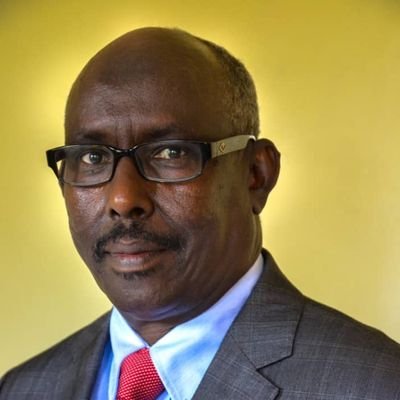
Dr. Mohamud Uluso, insidesomalia Columnist.

