

Somalia has slid into a deep, manufactured political crisis that is alarming both the Somali people and the international community. This crisis is not accidental—it is the deliberate work of President Hassan Sheikh Mohamud, who has meticulously designed a flawed electoral system under his direct control—one that effectively guarantees his continued hold on power.
This project has been advanced under the disingenuous pretext of moving away from misused indirect parliamentary elections—a process widely criticized for manipulation by both Federal Member States and the Federal Government. Yet, rather than reforming that flawed system, the President has sought to replace it with an even more problematic model: a so-called “one person, one vote 4.5 clan party election.” This model is centrally controlled, structurally incoherent, and impracticable.
The mandates of the Federal Parliament and the Presidency are clearly defined as four-year terms. Yet, rather than preparing for lawful elections in the final months of his term, the President has spent his tenure engineering a project aimed at consolidating power. He has unilaterally altered both the constitutional framework and the electoral model without transparency, consensus, or due process.
This manipulation began as early as 2023, when he moved to extend the terms of Federal Member State leaders under the pretext of “realigning” Somalia’s electoral cycle—from local councils to the presidency. At the same time, indirect elections continued to be arbitrarily implemented on multiple occasions without a clear legal basis. Critically, this sweeping transformation was neither preceded by a credible political process nor supported by independent technical assessment. There was no structured evaluation of feasibility, risks, stakeholder views, timelines, or implementation modalities. Instead, the process was conceived, driven, and controlled solely by the President.
Although there was a constitutional mandate to complete the Provisional Federal Constitution through clearly defined procedures, the President’s approach violated the principles of transparency, integrity, and participation required for constitution-making in a fragile state. The process was effectively hijacked to serve narrow political interests.
Unsurprisingly, this unilateral approach fractured political consensus. Puntland withdrew early, recognizing the centralized nature of the process. Rather than pause and recalibrate, the President pressed ahead—pushing through controversial amendments to the first four chapters of the Constitution to advance his electoral agenda, then, years later, rushing through the remaining chapters within weeks. Public opposition was widespread and intense, yet largely ignored.
Jubbaland, under President Ahmed Madobe, later followed suit, withdrawing from what it viewed as an attempt to centralize federal power. This breakdown escalated into armed confrontation between Jubbaland and the Federal Government—further damaging Somalia’s fragile state-building process. Even more dramatic was the Federal Government’s attack on Southwest State, which forced the regional president and his cabinet to flee the country.
Throughout this deterioration, Somalia’s international partners remained largely passive—reduced to bystanders issuing muted statements while the crisis deepened. While the origins of the crisis are domestic, international actors—particularly those operating under the frameworks of the United Nations Security Council and the African Union—bear responsibility for supporting Somalia’s state-building and democratic governance.
Since 1991, the international community has been deeply engaged in rebuilding Somalia’s institutions. Silence or inaction in the face of systemic constitutional erosion signals not neutrality, but negligence—and, at times, complicity driven by diplomatic convenience.
As disputes intensified, the dysfunction of the federal system became increasingly visible. Yet no meaningful preventive intervention was undertaken. Despite repeated warnings and appeals from opposition groups and independent analysts, international partners failed to act decisively to preserve the constitutional, federal, and democratic order painstakingly rebuilt over decades.
President Hassan openly dismissed these calls and proceeded with a deeply flawed model whose failure was proven during the December 25, 2025 Mogadishu local elections, where results appeared fabricated rather than derived from a credible voting process. The disconnect between voters, parties, and pre-determined clan allocations rendered the outcome fundamentally unverifiable.
It is therefore deeply troubling that some international partners continue to entertain—or implicitly legitimize—this manufactured electoral narrative. Such positions reinforce growing perceptions among Somalis of inconsistency, indifference, and political expediency.
Today, Somalia remains without a functioning Federal Parliament, whose mandate expired on April 14, 2026. The President’s term will expire on May 15, 2026—leaving only days remaining. Yet under these conditions, international actors are pressuring opposition groups to negotiate with a lame-duck president whose legal mandate is nearing its end and whose tenure has been defined by political manipulation and constitutional erosion.
This approach is neither principled, nor fair, nor sustainable.
It is time for Somalia’s international partners to urgently recalibrate their position. They must demonstrate clarity, unity, and resolve by supporting the immediate organization of indirect parliamentary elections under credible supervision and legitimacy guarantees from the United Nations and the African Union.
Only by halting this disastrous electoral project and facilitating immediate, lawful parliamentary elections can Somalia restore constitutional order and enable the election of the next president.
Somalia cannot afford further delay, manipulation, or diplomatic ambiguity. The crisis is real, immediate, and dangerous—and it demands decisive action before the damage becomes irreversible.
The diplomats of the international community must choose: stand for the restoration of a credible democratic process—or be remembered as complicit in its dismantlement.
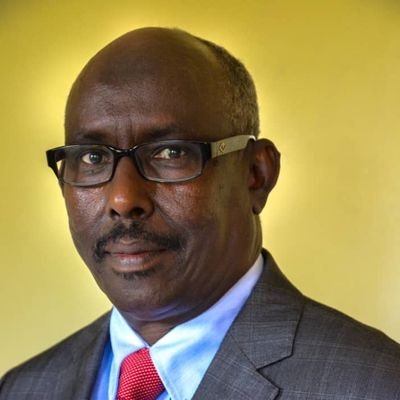
Dr. Mohamud Uluso, insidesomalia.net Columnist.

