

This morning, 24 September 2026, three heartbreaking headlines about Somalia underscored the urgent need for Somalis to take responsibility for their country’s salvation in the interest of all.
1. The Somaliland Demonstration at the United Nations
The first headline concerns a demonstration outside the United Nations headquarters in New York by supporters of Somaliland’s secession, led by President Abdirahman Irro.
While demonstrators have a legitimate right to express their political aspirations, what makes this demonstration particularly troubling is the participation of two former senior officials of the Federal Government of Somalia: Abdirahman Beyle, former Minister of Foreign Affairs and Finance, and Osman A. Dubbe, former Minister of Information. Both were once outspoken defenders of Somali unity. They publicly expressed an emotional and unwavering commitment to the union while serving in senior federal positions.
Beyle has also faced allegations regarding wealth accumulated during his five years as Minister of Finance under former President Mohamed Abdullahi Farmajo—allegations that severely damaged his reputation, credibility, and trustworthiness.
People may change their political views on legitimate and reasoned grounds. However, a fundamental reversal on a matter as consequential as national unity demands a credible explanation—particularly from highly educated individuals who previously defended that unity at the highest international level, in front of which they are now demonstrating.
Their participation in a demonstration outside the UN headquarters—where both men once represented Somalia—raises serious questions about their core principles and political integrity. Their past positions and public declarations are well remembered by the international diplomats working inside.
Surely, their participation undermines the credibility of the demonstration itself and damages the cause they now claim to represent. Furthermore, the demonstration is a direct embarrassment for Hassan Sheikh Mohamud, highlighting his failure to address the Somaliland issue through serious and credible dialogue over the past four years. Although he is currently in New York attending the 81st United Nations General Assembly, his presidential mandate expired on May 15, 2026.
The spectacle is deeply disheartening for Somalis who remain committed to national unity
2. The Alarming Food Insecurity and Malnutrition Crisis
The second heartbreaking headline concerns the Food and Agriculture Organization’s warning that “approximately 5.4 million Somalis are projected to face acute food insecurity at IPC Phase 3 or above between October and December 2026. Rural communities account for nearly two-thirds of the estimated 1.92 million people facing malnutrition, while flooding threatens crops, livestock, and livelihoods.”
IPC Phase 3 signifies a serious food crisis in which families face substantial food consumption gaps or are forced to adopt harmful coping strategies, including selling essential productive assets to meet their immediate survival needs.
What makes this crisis even more alarming is the uncertain prospect of timely international assistance amid competing global emergencies—particularly in the Horn of Africa and the wider Middle East—and a general reduction in foreign aid.
A delayed international response could devastate millions of lives, livelihoods, and an already fragile economy. The situation is compounded by Somalia’s political crisis and the absence of a legitimate national government capable of prioritizing the welfare of its people.
3. Hassan Sheikh Mohamud’s UN Address and Somalia’s Political Crisis
The third heartbreaking headline concerns Hassan Sheikh Mohamud’s outlandish address to the 81st United Nations General Assembly.
While Somalia confronts a profound political, humanitarian, and security crisis, Hassan Sheikh Mohamud remains focused on retaining power past the expiration of his term. He seeks to achieve this through unilateral and disputed constitutional amendments, controversial electoral laws, and the promotion of his political organization—the Justice and Solidarity Party—which mirrors communist or totalitarian party structures.
His UN address was hollow, contradictory, and disconnected from the reality experienced by the majority of the Somali people. It presented a misleading picture of Somalia’s political, economic, and security situation to an international audience already familiar with the country’s deepening problems—issues that remain before the UN Security Council, which has been seized of the Somali matter since 1991.
Three letters of warning and appeal addressed to senior United Nations officials—including the President of the General Assembly, the Secretary-General, and the President of the Security Council—were submitted by prominent Somali political leaders. The signatories included the Council for the Future of Somalia (which brings together Puntland, Jubbaland, and opposition groups), the President of Puntland, and former President Mohamed Abdullahi Farmajo.
The letters, whose contents have been widely publicized by local and international media, detail the unfolding crisis and the risk of state collapse. They emphasize the urgent need for international intervention to facilitate an agreed electoral model and process, followed by the swift execution of federal elections within months.
Yet Hassan Sheikh Mohamud remains determined to press ahead doggedly with his unilateral electoral process rather than negotiate with the opposition. His election scheme lacks the broad consensus required for credible national elections and openly contradicts the very principles outlined in his disputed constitutional amendments. In fact, a recent Supreme Court ruling highlighted the flagrant, irreparable violations and abuses committed by his electoral commission in implementing a pre-planned, rigged process—one where outcomes are decided in advance to ensure his party, the JSP, secures a total monopoly on power at all levels.
Today, the Federal Government’s effective authority is largely concentrated in Mogadishu, while much of the rest of the country remains engulfed in political turmoil, insecurity, and deepening divisions.
These three developments expose the gravity of Somalia’s predicament: the erosion of a principled commitment to national unity, the worsening humanitarian catastrophe, and the persistence of a political crisis that threatens the survival of the Somali state.
Somalis must recognize that their country’s salvation cannot be postponed or left entirely to outsiders. The political impasse must end immediately through genuine national dialogue, an agreed electoral process, and the restoration of constitutional government, national unity, and public accountability.
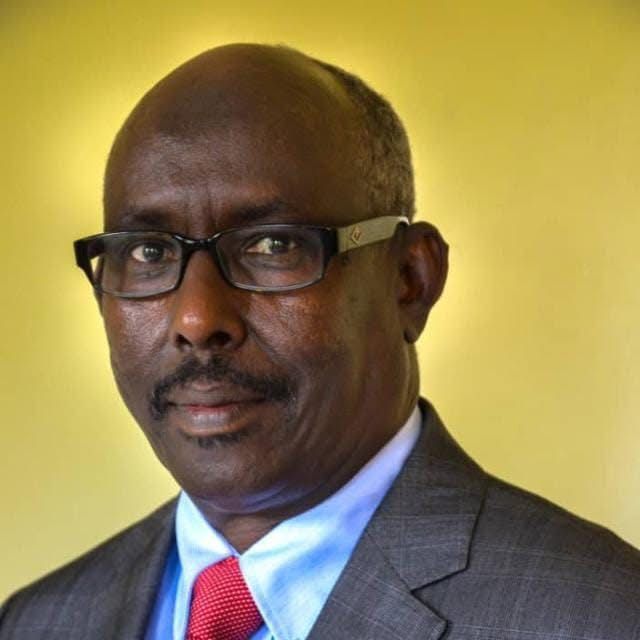
Dr. Mohamud Uluso

