

It is both unbelievable and heartbreaking that, effective May 16, 2026, Somalia wakes up without a legitimate Federal Parliament and Federal President for the first time since the establishment of the permanent Federal Government of Somalia on August 1, 2012. The mandate of the Federal Parliament expired on April 14, 2026, while the President’s term ended on May 15, 2026, amid the absence of an agreed electoral process and constitutional consensus. Under the governing Constitution, neither institution can legitimately continue in office, even in a caretaker capacity.
The principal culprit of this avoidable crisis is President Hassan Sheikh Mohamud, who spent much of his four-year term concentrating power in his own hands while dismantling, rather than strengthening, institutional balance, oversight, accountability, and constitutional governance. From the beginning of his term, he moved quickly to dominate the Federal Parliament through political and financial inducements that weakened parliamentary independence, while simultaneously taking direct control of the executive branch, sidelining the Prime Minister, and undermining the constitutional separation of powers.
At the same time, President Hassan maneuvered and pressured Federal Member States to endorse controversial constitutional and political measures concerning federal-state power-sharing, revenue-sharing, and security and justice structures — measures widely viewed as paving the way for unilateral alteration of the Provisional Federal Constitution. These orchestrated and rushed initiatives, advanced without sufficient time for serious review or broad consultation, alarmed the constitutionally autonomous Puntland and Jubbaland states, both of which subsequently suspended cooperation with the Federal Government.
Rather than pausing for dialogue, compromise, and constitutional consensus, President Hassan responded with retaliatory restrictive and punitive policies and, at times, military confrontations and inflammatory political incitement against those states. The confrontation between the Federal Government and the Federal Member States deepened political tensions, intensified clan and regional mistrust, and contributed to deaths, injuries, suffering, and destruction that painfully affected ordinary citizens.
As a result, the President’s four-year term ended amid worsening constitutional disputes, expanding anti-democratic practices, deep political polarization, and chronic corruption and mismanagement of public affairs. President Hassan — whose foremost responsibility was to preserve national unity, constitutional order, and the rule of law — instead became a central figure in the escalation of conflict, abuse of power, corruption, political manipulation, and increasingly authoritarian governance.
This internally generated political crisis was further aggravated by external pressures and foreign intrusions affecting Somalia’s sovereignty, territorial integrity, political independence, and national stability. Together, these domestic and external pressures severely weakened Somalia’s already fragile efforts toward peace-building, state-building, security, economic recovery, and public service delivery.
In perhaps the most bizarre aspect of this political crisis, President Hassan launched a campaign to consolidate power under a single dominant party while promoting what he described as a “one person, one vote” electoral process. In reality, what is being implemented bears little resemblance to a genuine universal suffrage system. Somalia remains politically organized under the 4.5 clan power-sharing structure, which cannot simply be rebranded as one-person, one-vote while political representation continues to follow pre-assigned clan quotas.
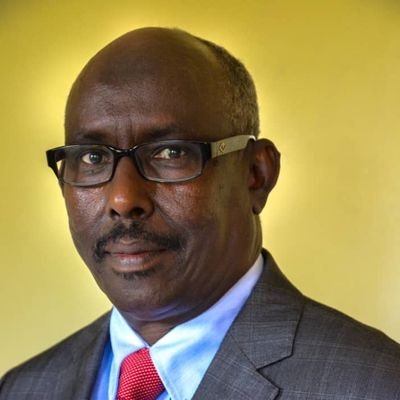
Dr Mohamud Uluso, insidesomalia Columnist.

