

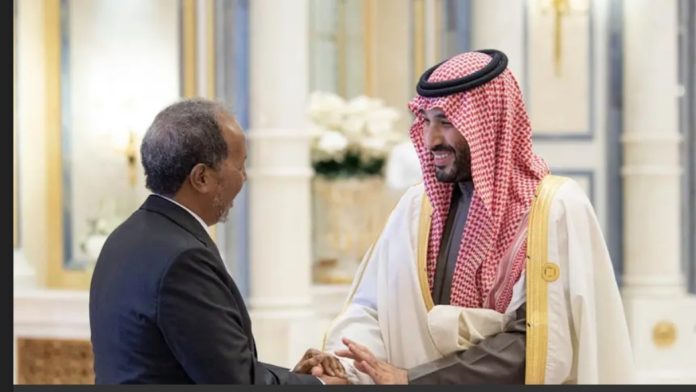
Somalia is fast becoming a central theater in mounting Gulf Arab rivalries, with the African nation’s diplomatic orientation taking several traumatic twists. Late last year, Mogadishu’s relations with Abu Dhabi ruptured after Israel and Somaliland—a separatist republic that the central government does not recognize—announced their mutual recognition.
Somali officials suspected that the United Arab Emirates (UAE) had facilitated the deal given the close Emirati ties with Israel. On Jan. 12, Somalia’s Council of Ministers canceled all agreements with Abu Dhabi, including those reached independently by the country’s federal states.
While the UAE did not react publicly, Emirati personnel reportedly left Somalia’s capital in an apparent attempt to de-escalate tension. However, the UAE presence has remained largely unchanged in the contested semi-autonomous federal states of Jubaland, Puntland and Somaliland, where local authorities have rejected Mogadishu’s decision.
Far from being a localized dynamic, the dispute is unfolding in the context of a growing strategic rift between Saudi Arabia and the UAE. The contention between the two Gulf Arab powerhouses has historically shaped their divergent engagements in Sudan and Yemen, and now increasingly in Somalia. The divergence is also having broader ramifications across the Horn of Africa, where pre-existing conflicts are quickly growing intractable and new flashpoints are on the rise.
Below is the more detailed information. 👇

