

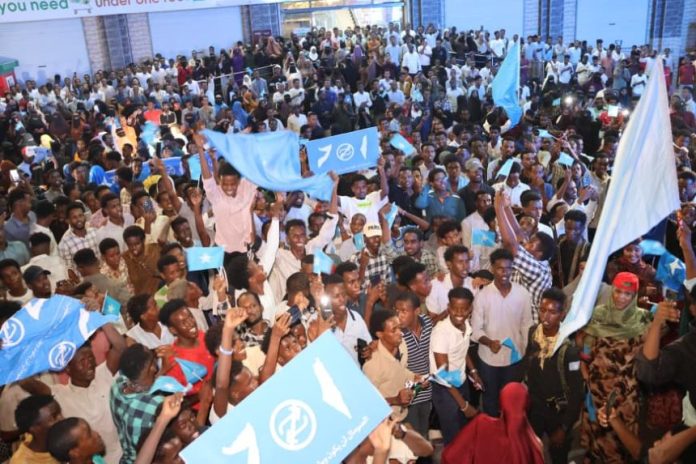
Those born in the early 1990s, around the time Somalia’s central government collapsed, are now between 30 and 40 years old. They belong to a generation that has endured extraordinary challenges, with many growing up without the stability and peace that children need. For much of their childhood, basic public services, including access to quality education, were either unavailable or severely limited.
Even those who managed to complete their education, often with support from their parents and through personal determination, now face an environment in which unemployment and limited economic opportunities remain widespread.
This generation has struggled to compete with its counterparts elsewhere in the world, including people of the same age in countries that gained independence around the same period as Somalia but managed to avoid state collapse.
These challenges have been particularly severe for those who grew up in southern Somalia, a region to which I also belong.
Ours is a generation that has paid a heavy price for state collapse, civil war, recurring droughts and political divisions. Those hardships alone would have been enough. Yet, over the past decade and a half, we have also had to contend with Al-Shabaab, an extremist group that kills fellow Somalis by branding them as infidels.
Somalia Today
Since the 2000 reconciliation conference in Arta, Djibouti, Somalia has gradually rebuilt a system of government based on political agreements, constitutional arrangements and a degree of power-sharing. Although the process has faced repeated setbacks and remains imperfect, state institutions have continued to develop.
Despite its shortcomings, Somalia is no longer in the same condition it experienced during the years of complete state collapse and lawlessness, when Al-Shabaab openly contested control of the streets of Mogadishu.
Today, major geopolitical developments around the world are having both direct and indirect consequences for Somalia. The country faces threats to its unity, sovereignty and state-building efforts, originating from both domestic and external sources.
These threats take different forms, and new challenges continue to emerge. Each passing day brings greater clarity about the risks surrounding the country’s future.
Among the most serious threats is Al-Shabaab, an extremist organization that has remained a persistent source of violence and instability in Somalia.
The group’s history is marked by bombings, destruction, economic restrictions, isolation and widespread human suffering. Its ideology and actions stand in direct contradiction to the principles of Islam, Somali identity, humanity, family ties and the values upon which Somali society is built.
Despite this, the group seeks to kill large numbers of Somalis and undermine the country’s national identity and sovereignty. Its ambitions are clear, but they should not be mistaken for an inevitable outcome.
Somalia’s future should be determined by its people and their institutions, not by an armed extremist movement. A Somali proverb, attributed to an earlier poet, captures the spirit of resistance: “A Muslim does not surrender in servitude, even when his head is at stake.”
What Is Expected of Our Generation?
Our generation has reached a critical moment. We must seriously assess the situation in Somalia and the wider world, understand the challenges ahead and make decisions that reflect the country’s long-term interests.
Can we accept a future in which Somalia loses its unity and statehood? What will become of our children if we fail to think seriously about the direction in which our country is heading?
We have already lost a significant part of our early lives to circumstances beyond our control. The only way to ensure that our children do not inherit the same hardships is to protect and strengthen state institutions.
A functioning state is the foundation upon which the life we aspire to build must rest. If Somalia had no government, it would be our collective responsibility to establish one. Fortunately, despite its weaknesses, a government and state institutions exist today.
Whoever holds political office is not the central issue. Governments come and go, and leadership changes over time. What matters most is our shared responsibility to protect the continuity of the state, keep it on the right path and prevent its collapse.
There is a traditional saying in the Mudug region: “Being elders means being ourselves without pretending to be something else.”
The choice before us is clear.
Despite our political disagreements, competition and rivalries, can we respect our differences while protecting the country’s statehood, national unity and sovereignty?
Or will some among us allow political or clan-based hostility to push them into supporting Al-Shabaab, amplifying its propaganda or celebrating its messaging simply because they oppose other Somalis?
Political disagreement must never become a justification for aligning with forces that threaten the country’s existence.
Misguided Voices and the Responsibility of History
In recent days, there has been renewed activity by individuals who, whether deliberately or through poor judgment, have become influenced by propaganda from Al-Shabaab and foreign actors sympathetic to the group.
History is being written, and it will record the choices made by members of this generation, including those who become online foot soldiers for Al-Shabaab on platforms such as Facebook and X.
I remain confident that Al-Shabaab has no sustainable future in Somalia. An organization that has failed to achieve power through force and bloodshed cannot secure the country’s future through coordinated propaganda campaigns on social media.
Somali men and women serving in the Somali National Army, alongside other citizens who have volunteered to defend their communities, are operating under difficult conditions. They are risking their lives in the struggle to protect the country’s institutions and prevent extremist violence from spreading further.
Their sacrifices deserve both public recognition and practical support.
Our armed forces deserve support in words and through concrete action. Those who refuse to support the country’s efforts to confront terrorism, or who openly wish for extremist violence to engulf Somali communities, must recognize the historical consequences of such positions.
Political opposition is a legitimate part of any political system. Criticizing the government of the day is not an act of betrayal. However, there is a clear distinction between opposing a government and siding with forces that seek to destroy the country.
Neither political grievances nor disagreements with the leadership of the day can justify supporting an organization responsible for widespread violence against Somalis.
A Responsibility to Future Generations
In conclusion, I am speaking directly to my generation.
We must put aside the differences that continue to divide us, including clan identity and political affiliations. We must reject greed and corruption and instead embrace patriotism, vision and a sense of national responsibility.
The survival of Somalia’s statehood is a shared inheritance that must be protected and passed on to future generations. It should never become a casualty of short-term political interests, personal ambitions or divisions among us.
This is the only viable path if we want to spare our children the misfortunes that defined the country during the years in which we were born and raised.
The Somalia of tomorrow will be shaped by the decisions our generation makes today. We must decide whether to preserve what has been rebuilt, strengthen the institutions that remain and create a country in which future generations can grow up with the peace, security and opportunities that were denied to us.
By:- Jafar Abdirizak Mohamed is a skilled photographer and videographer serving with the Media Office of the Galmudug Presidency. He has extensive experience in modern media production and journalism, having previously worked with Goobjoog Media as a journalist and media professional. He is recognized for his professionalism, creativity, and expertise in visual storytelling and media communications.


